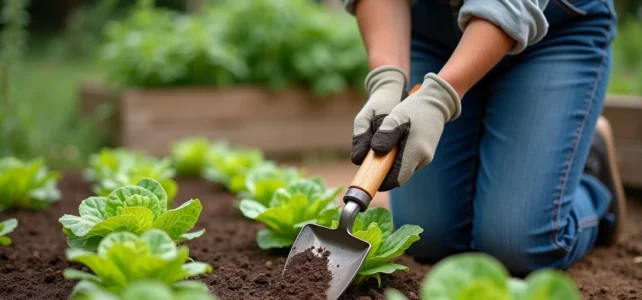
Hoe, cultivator, and weeder: three names that come up whenever we talk about soil work in the garden. Their similarities create a persistent confusion, even among experienced gardeners. Each tool corresponds to a logic of cutting, penetration, or versatility that directs its use towards specific tasks, whether in a private vegetable garden or in a municipal green space.
Hand tools in private gardens and professional contexts: two usage logics
In a private garden, the choice between hoe, cultivator, and weeder is often made out of habit or family inheritance. Individuals rarely own all three and tend to use a single tool for multiple tasks. The weeder, with its double head, serves this role like a Swiss army knife.
In a professional context, the logic changes. Municipal gardeners or green space maintenance providers select the tool based on the nature of the soil and the type of vegetation to be treated. A municipality maintaining flower beds in clay soil does not use the same equipment as an agent working on gravel paths.
The regulatory framework also plays an unknown role. The so-called “handyman” activity, which allows for the maintenance of private gardens at home, requires staying within elementary and occasional tasks that do not require building qualifications. In practice, this encourages a strong use of lightweight hand tools like the hoe or weeder, which are compatible with these constraints. To delve deeper into the difference between hoe and cultivator, one must look at the shape of the blade and the working angle on the ground.
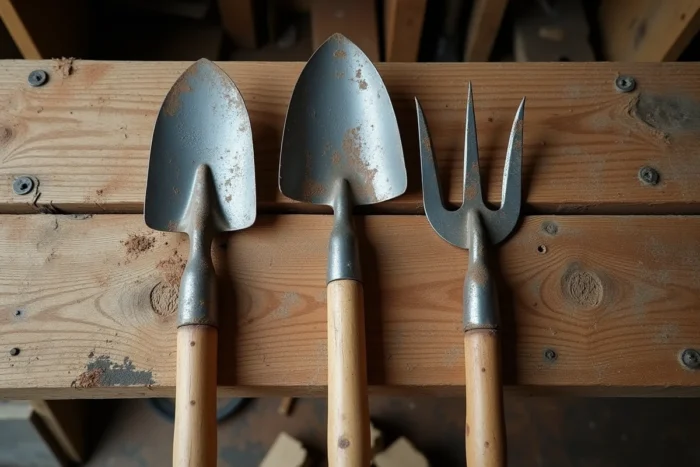
Hoe, cultivator, and weeder: anatomy and function of each blade
The confusion between these three tools arises from the fact that they share the same principle: a metal head fixed to a handle, used to work the top layer of soil. The differences lie in the geometry of the blade and the angle of attack.
The hoe and its flat blade
The hoe has a wide, thin, and sharp blade, oriented at a right angle to the handle. It works on the surface, using a horizontal back-and-forth motion. Its main role is weeding: cutting weeds just below the soil surface without turning the earth deeply.
This characteristic makes it particularly suitable for weeding between rows of vegetables in the vegetable garden. It does not dig; it shaves. On already loose soil, it is remarkably effective.
The cultivator and its deep work
The cultivator is distinguished by a thicker and heavier blade, often curved, which allows it to penetrate the soil several centimeters. The motion is vertical or oblique, unlike the scraping movement of the hoe. It is used to break a crust of soil, open a furrow, hill potatoes, or loosen compacted soil.
In municipal green space services, the cultivator remains a reference tool for planting work in open ground. Its robustness makes it suitable for heavy or compacted soils that the hoe cannot penetrate.
The double-headed weeder
The weeder combines two ends on the same metal head:
- A blade (small flat blade) used for hoeing, weeding, and tracing shallow furrows
- A forked or pointed part that allows for scratching the soil, aerating the earth, and uprooting weeds
This dual function makes the weeder the most versatile tool of the three. Several gardening outreach platforms now rank it among the five basic tools for starting a garden, on par with the spade and fork-spade.
Clay soil, sandy soil: which tool for which terrain
The type of soil conditions the choice more than the type of crop. On sandy, light, and crumbly soil, the hoe is sufficient for most surface work. Weeding is done without effort, and the thin blade cleanly cuts the superficial roots of unwanted grasses.
On clay soil, the situation is different. The soil forms a hard crust as it dries. The hoe glides over it without biting. The cultivator then becomes the first resort to break this crust before any other work. The weeder, with its pointed end, can also scratch moderately hard soil, but it quickly reaches its limits against compact clay.
Field reports vary on this point: some professional gardeners prefer a rotary tiller pass before using the weeder on clay soil, while others go directly for the cultivator. The choice depends on the area to be covered and the frequency of maintenance.
Maintenance of the blade and handle: what extends the lifespan
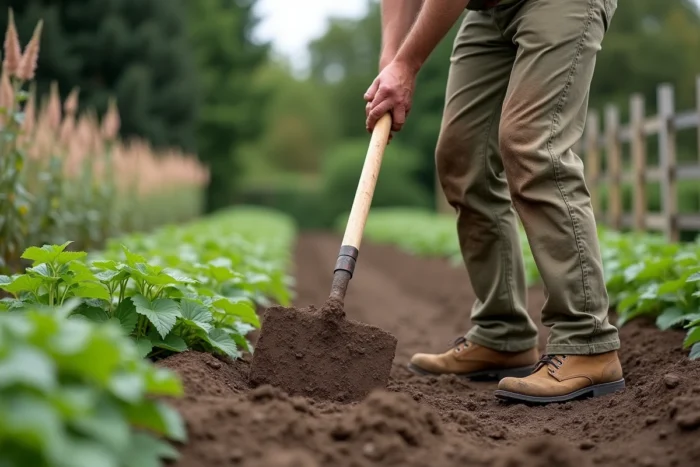
A well-maintained hand tool lasts for decades. The steel blade of the hoe, cultivator, or weeder dulls over time, especially on stony soils. Regular sharpening with a flat file restores the edge in a few minutes.
Three actions prolong the life of these tools:
- Clean the blade after each use to prevent rust, by rubbing off residual soil with a wire brush
- Wipe an oiled cloth over the metal part before winter storage
- Check the connection between the head and the handle at the beginning of each season, as a loose fitting reduces the precision of the motion and increases fatigue
The wooden handle (usually ash) can split if left exposed to the elements. Storing it in a sheltered place, head down, is sufficient to prevent this problem. Fiberglass handles, offered by some manufacturers, resist moisture better but transmit more vibrations.
The choice between hoe, cultivator, and weeder is not merely a personal preference. The nature of the soil, the size of the plot, and the type of tasks to be performed guide the choice of one tool over another. For a small vegetable garden in light soil, a hoe and a weeder cover most needs. For work on heavy soil or larger areas, the cultivator remains hard to replace.