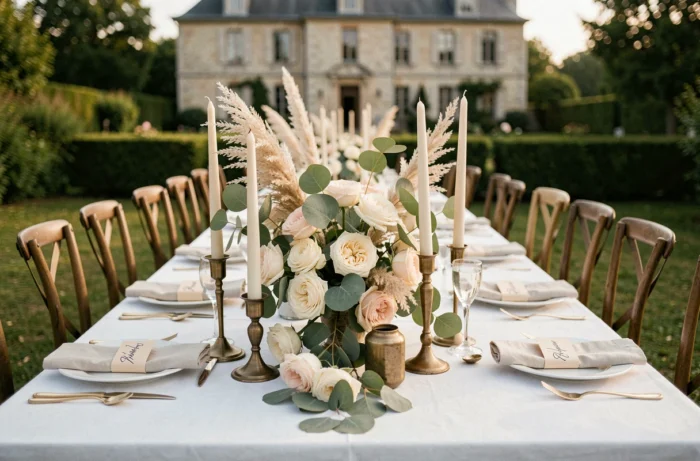
When planning wedding decor, the first instinct is often to look for photos of centerpieces and floral walls. In 2024, the underlying trend is shifting: we first design an overall atmosphere, then choose the decorative elements that serve it.
Wedding decoration is no longer just about accumulating pretty objects on a table. It structures the experience of the guests from the beginning to the end of the evening.
Wedding Scenography: Thinking in Atmospheres Rather Than Objects
On the ground, the difference between a “decorated” wedding and a “scenographed” wedding lies in the flow of guests. Decorators working on large receptions have noticed this: creating distinct zones with their own ambiance has a greater impact than a uniform, even sumptuous, decor.
In practical terms, we break the space into micro-ambiences. The cocktail can take place in a corner lit by warm string lights with low furniture and cushions. The dinner shifts to a more subdued light, candles, and drapery. The dance floor benefits from programmed light transitions that mark the highlights of the evening.
This approach requires thinking about the flow plan before choosing a single flower. We trace the guests’ path, identify bottlenecks, and place decorative elements to naturally guide the flow. A large monumental drape at the entrance of the reception hall does not just serve to look pretty: it signals a change in atmosphere.
To find visual references suitable for this type of scenography, the decor on Wedding News gathers examples categorized by style and reception format.
Bright Colors and Bold Palettes for the Wedding Table
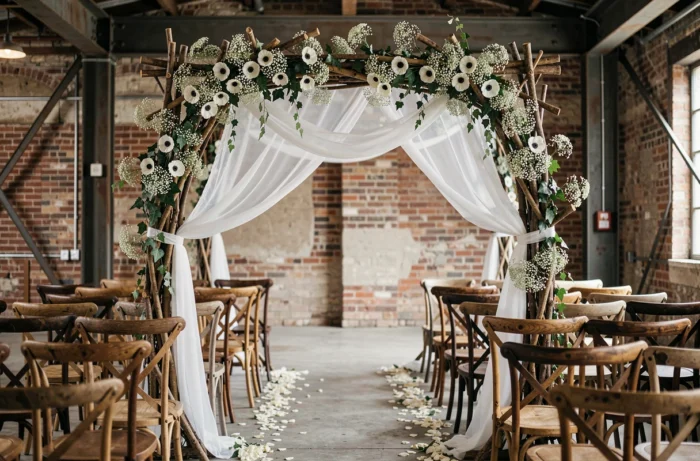
Beige and off-white have not disappeared, but they no longer dominate alone. Couples getting married in 2024 are daring bold color palettes: lemon yellow, deep terracotta, sage green, Klein blue. Color becomes a strong personalization tool, not just a simple accent.
The trick that works on the ground is to choose a dominant color and apply it across three different supports: the tablecloth or runner, the napkins, and a tall element (colored candle, ribbon on the chairs). The rest can remain neutral. Too many colors kill the color.
Combining Colors and Natural Materials
Raw wood, crumpled linen, or artisanal ceramics temper bright shades and avoid the “carnival” effect. A terracotta centerpiece placed on a wooden board with dried flowers creates a balance between chromatic boldness and rustic warmth.
- Lemon yellow works well in small touches (napkins, printed menu) rather than as a full tablecloth, especially in natural light.
- Sage green easily pairs with light wood and white candles for a modern rustic vibe.
- Terracotta remains a safe bet: it effortlessly combines with gold, cream, and dried flowers.
Immersive Installations: Replacing Floral Overkill
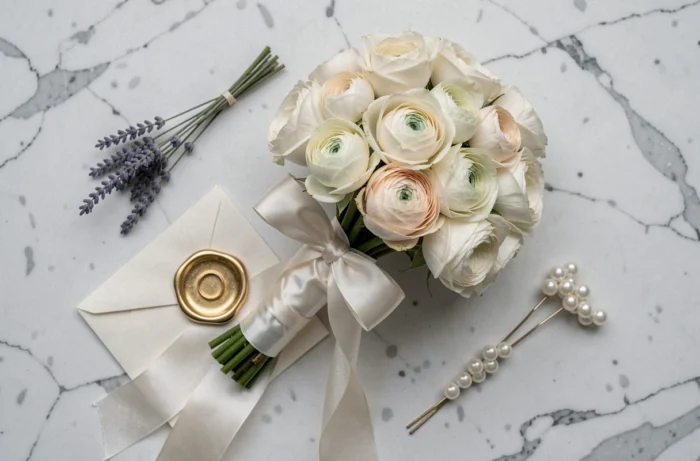
Instagram flower walls are a thing of the past. The trend observed among wedding scenographers in 2024 favors one or two major installations that transform the entire space. We are talking about sculptural structures, monumental drapery suspended from the ceiling, or table plans that become artistic pieces integrated into the decor.
This shift responds to both practical and aesthetic logic. A floral wall is expensive, wilts, and serves only one purpose (photos). A light installation or architectural drapery visually restructures the entire room and accompanies guests for several hours.
Programmed Lighting and Interactive Elements
LEDs and light projections allow for changing the ambiance of a room without touching the furniture. You can transition from a golden light during dinner to cooler, dynamic tones for the first dance. Feedback on this point varies depending on the room’s configuration, but lighting remains the most underestimated decor lever in budget-conscious weddings.
Some couples also incorporate interactive elements: a space where guests compose a message projected onto a wall, or a photo area with a sculptural backdrop instead of a classic photobooth. The idea is for the decor to generate shared memories, not just snapshots.
Eco-Responsible Decoration: Concrete Choices for a Sustainable Wedding
The discourse on eco-responsibility in weddings now goes beyond simply “we used local flowers.” The choices that make a real difference fall into three specific areas:
- Renting rather than buying for dishes, furniture, and decorative elements. This avoids storing dozens of vases after the party.
- Seasonal flowers grown locally, which reduce transport and last longer in vases than refrigerated imported flowers.
- Reusable or compostable elements: vegetable wax candles, seeded paper confetti, returnable glass containers.
The classic pitfall is wanting to do everything DIY out of ecological concern and ending up overwhelmed the day before the wedding. It’s better to focus the effort on two or three high-impact areas (flowers, dishes, lighting) and accept compromises elsewhere.
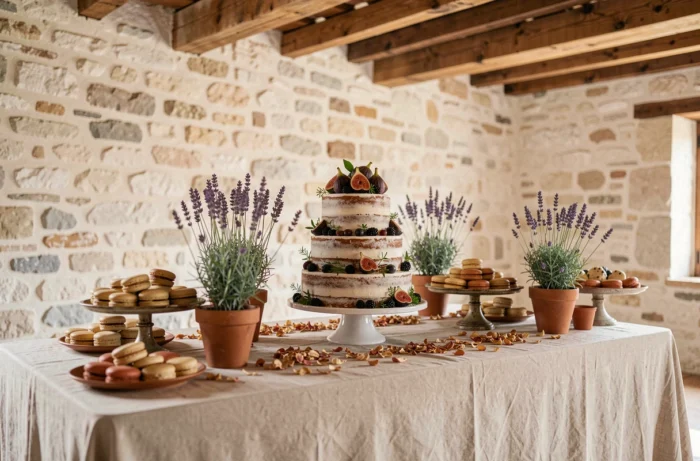
Wedding decoration in 2024 boils down to an operational principle: fewer scattered decorative pieces, more coherence in the overall experience. A couple that invests time in the flow plan, chooses a consistent color palette, and thinks through the lighting will achieve a more striking result than by multiplying small elements on each table. The most successful decor is that which guests feel without necessarily being able to describe it.


