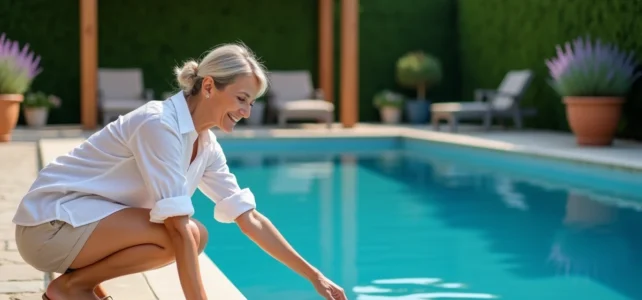
The gel coat of a polyester shell is chosen only once. Unlike a liner that can be replaced every ten years, the color of the pool shell accompanies the basin throughout its lifespan. This choice determines the perceived hue of the water, the visual comfort at the edge of the basin, and the integration of the pool into its landscaped environment.
Gel coat and water perception: what the shell color really changes
The color of the gel coat does not literally color the water. It alters the way natural light reflects in the basin, producing a different perceived hue depending on the viewing angle, depth, and time of day.
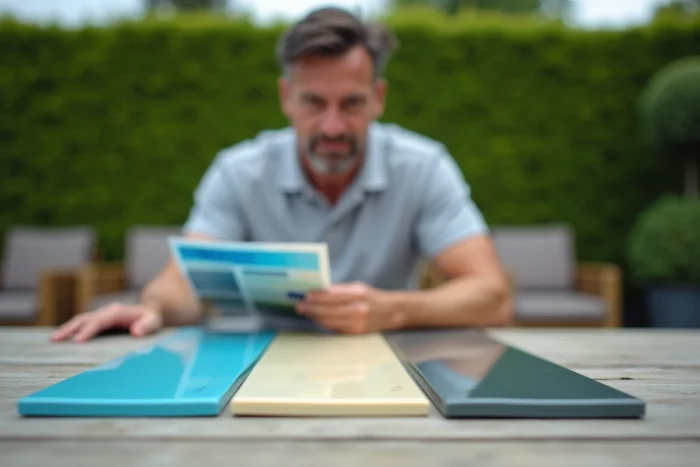
A white gel coat gives very clear turquoise water, almost translucent in shallow depths. Beige leans towards emerald green, sometimes referred to as “lagoon.” Classic blue enhances visual depth with richer tones. Light gray produces a metallic steel-blue, understated and quite distant from traditional pool blue.
Before deciding on the different pool shell colors available on the market, it is essential to keep in mind that the final result also depends on the immediate environment: the vegetation reflecting, the coping stones, the garden floor. A catalog photo taken under Mediterranean sunlight at noon will not reflect the actual rendering in a Breton garden on a cloudy day.
Pool shell color and climate: an underestimated technical criterion
Most color choice guides focus on aesthetics. The climatic parameter is rarely explicitly stated, even though it has direct consequences on user comfort.
Very sunny regions: limit glare
In Mediterranean climates or the southwest, light-colored coatings (white, pale beige) amplify glare. White, for example, can cause significant visual discomfort during the brightest hours. Darker shades (light gray, medium gray) absorb more light and reduce this eye strain.
Less sunny regions: capture brightness
Conversely, in areas where the sky is often overcast, a white or beige gel coat captures and redistributes available brightness. The water appears livelier, and the basin more inviting even on gray days. A dark bottom in these conditions can result in dull, almost opaque water.
The local climate weighs as heavily as architectural style in the color choice. This dimension almost never appears in manufacturers’ color charts, which present their shades under standardized lighting.
Dark bottom in polyester shell: real advantages and known limits
Shells with anthracite gray or almost black gel coats are multiplying in catalogs, driven by a “mirror pool” aesthetic that is very present on social media. The effect is spectacular, with a water surface that reflects the sky and vegetation like a natural body of water.
The main functional advantage is thermal. Dark bottoms retain more solar heat, which can extend the swimming season by a few weeks in cooler climates. For a basin located in northern France or at altitude, this gain is not negligible.
However, field reports indicate a compromise to be aware of before committing:
- The visibility of debris (leaves, insects, sand) decreases significantly on a dark bottom, which can complicate the assessment of the basin’s cleanliness with the naked eye.
- The micro-defects of the gel coat surface (slight scratches, limescale deposits) are less visible on a light bottom and more pronounced on anthracite, especially when the basin is empty during maintenance.
- Glare is reduced, but the perception of depth is also affected: a very dark bottom erases visual references in the water, which can be concerning with young children.
The available data do not allow for a conclusion on a difference in durability of the gel coat between light and dark shades. Manufacturers apply the same isophthalic resins regardless of color. Longevity mainly depends on the thickness of the gel coat and the manufacturing conditions.
Light gray: why this shade dominates the residential pool market
Since 2024, light gray has become the most requested color for contemporary residential pool coatings, surpassing the classic blue that had dominated the market for decades. This shift reflects a change in taste related to architecture: new homes with light stucco, wood cladding, or stone facing match better with a gray basin than with a bright blue.
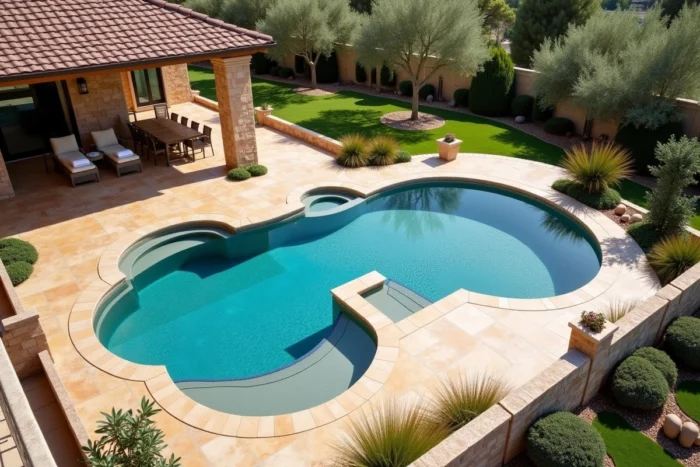
Light gray offers a sought-after compromise. The water takes on a steel-blue hue, halfway between natural and contemporary. The color better masks sand deposits and limescale marks than pure white, reducing the perceived frequency of cleaning. It remains bright enough to avoid the “black hole” effect of anthracite shades.
However, gray is not a default choice. It does not pair well with certain natural stones with warm tones (honey travertine, golden sandstone) where beige or sand would work better. The color choice benefits from being cross-referenced with coping and terrace materials, not just with the facade of the house.
Combining shell color, coping stones, and landscaping
A common mistake is to choose the shell color in isolation, then select coping stones and paving at a later stage. The result can create visual dissonances that are difficult to correct afterward.
- A beige gel coat paired with gray reconstituted stone coping produces a cold contrast that neutralizes the lagoon effect initially sought.
- A light gray gel coat with dark composite wood coping creates a natural contemporary harmony, very consistent with current outdoor designs.
- A white gel coat on a light travertine terrace can saturate the space with brightness and give a washed-out appearance in strong heat.
The surrounding vegetation also matters. Dark green leafy trees (laurel, oak) reflect differently in a gray basin (subtle reflection) and in a white basin (very pronounced reflection). Mediterranean gardens with a mineral predominance benefit from sand or beige shades that extend the palette of the ground.
Rather than reasoning in terms of a preferred shade, the choice of pool shell color works better when it starts from the existing: soil type, house materials, species of nearby trees, orientation of the basin relative to the sun’s path. The gel coat color is not an autonomous decorative element; it is the visual link between the basin and everything surrounding it.