
Typology is a French cosmetics brand founded in 2019 by Ning Li, built on a model of direct online sales. Its short formulas, amber bottles, and reasonable prices have attracted a wide clientele. However, the question arises regularly: why is this brand not found on Sephora’s shelves, and where can one actually buy its products?
Direct-to-consumer model: the founding choice of Typology
Typology was designed from the outset as a 100% digital brand. The principle is based on eliminating intermediaries between manufacturing and the consumer. By avoiding distributor margins, the brand can offer serums, creams, and cleansers at lower prices than comparable ranges sold in perfumeries.
This model has another direct consequence: Typology fully controls the shopping experience. The official site offers an online skin diagnosis that guides each visitor to products suited to their skin type and concerns. This diagnosis serves as a loyalty lever that the brand would lose by entrusting its references to a third-party retailer.
To find out where to buy Typology products outside of the official site, it is important to understand that the brand has long limited its physical presence to a few occasional operations in Parisian concept stores, such as the Merci store.
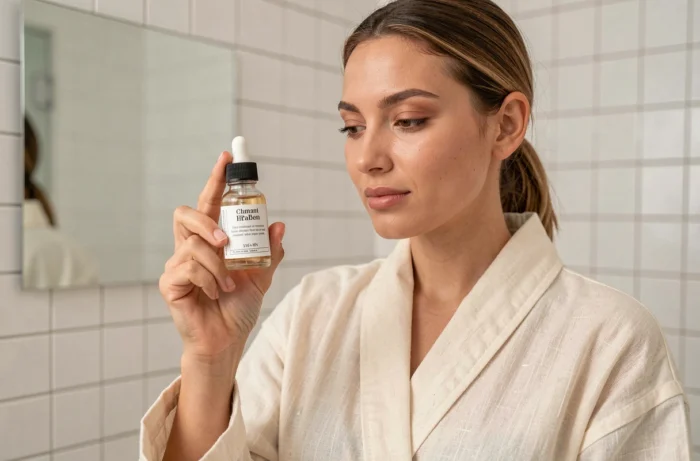
Typology and Sephora: why the brand remains absent from the shelves
Sephora operates as a multi-brand distributor with its own listing rules, margin negotiations, and merchandising constraints. For a brand like Typology, joining this network would mean giving up a significant portion of the selling price to the distributor.
The economic calculation does not align with the brand’s strategy. Typology features formulas with few ingredients and clearly indicated active concentrations on each product. This positioning is based on transparency, including pricing. Going through Sephora would require raising prices or reducing margins, both options incompatible with the brand’s promise.
The strategic dimension goes beyond price. At Sephora, advisors direct customers to the entire catalog, not to a specific brand. Typology would lose the direct relationship it maintains with its clientele through its site, personalized emails, and skin diagnosis. Therefore, the choice not to be at Sephora is both a brand logic and a financial decision.
Typology store in Paris and retail expansion in France
The situation has recently evolved. Typology is no longer limited to online sales and ephemeral collaborations. The brand has opened a flagship in Paris, a dedicated space that allows customers to test textures, smell products, and receive personalized advice.
This opening is part of a broader approach. According to recruitment announcements posted by Ning Li on LinkedIn in 2026, Typology is specifically hiring for positions related to retail and physical expansion. The targeted markets are not limited to France: recruitments also concern the United States and Japan.
The nuance remains important: Typology does not distribute its products through large third-party retailers. The brand favors points of sale that it directly controls or very selective partnerships. This approach allows it to control product presentation, seller training, and the consistency of the customer experience.
- The official site typology.com remains the main channel, with the skin diagnosis and access to the entire catalog.
- The Paris flagship offers a sensory experience impossible online, with advisors trained in the brand’s formulas.
- Some concept stores and department stores occasionally host Typology corners, but these presences remain limited and temporary.
Online diagnosis: an advantage that retail cannot replace
The diagnosis offered on the Typology site analyzes skin type, imperfections, sensitivity level, and care habits. It then generates a personalized routine with specific products. This process, impossible to replicate in a Sephora aisle shared among dozens of brands, is one of the strong arguments for the direct model.
Personalization is at the heart of the value proposition. Typology does not simply sell a caffeine serum or a moisturizing cream: the brand sells a custom-built routine. Physical retail complements this approach without replacing it.
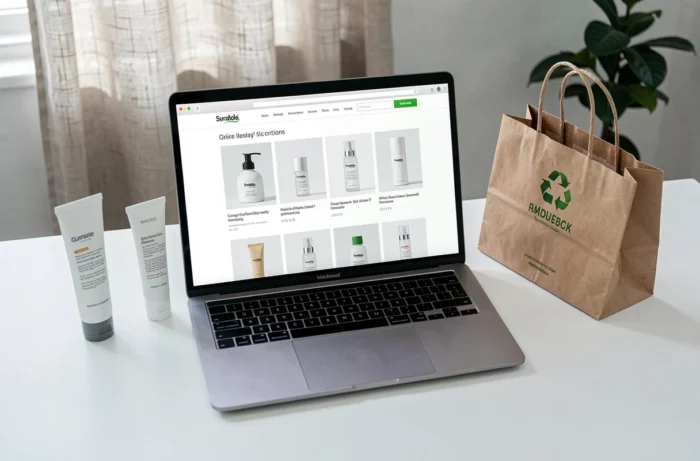
Typology facing the French cosmetics market: an atypical positioning
The French cosmetics market is dominated by powerful distribution networks. Sephora, Marionnaud, pharmacies, and hypermarkets share the majority of physical sales. Choosing to stay outside these circuits represents a gamble that few brands can afford.
Typology succeeds in this thanks to several factors. Minimalist formulas (between five and fifteen ingredients per product) appeal to an informed clientele that checks scores on apps like Yuka before purchasing. Online reviews, particularly on Trustpilot, play a role of social proof that a perfumery’s display cannot offer in the same way.
The model works because Typology’s target audience already shops online. The brand does not seek to convince consumers attached to traditional channels. It addresses buyers who compare compositions, read reviews, and prioritize transparency over the notoriety of the point of sale.
Ingredients and formulas: what the consumer checks before buying
Typology products systematically display the complete list of ingredients and the concentration of key actives. A caffeine serum indicates the exact percentage of active, a cleanser specifies the origin of each component. This transparency, which has become a purchasing criterion for a growing share of consumers, lends itself better to a detailed online product sheet than to a label on the shelf.
Typology has built its reputation on a model that Sephora cannot accommodate without distorting it. The brand prefers to develop its own physical network at its own pace rather than ceding control to a distributor. For consumers, the official site remains the most comprehensive entry point, now complemented by the Paris flagship and a few selective in-store presences.